Posted on

Honey Bees Now Available for 2026 Season

A wooden frame and screen filled with bees.


Great Lakes Bee Company will soon welcome honey bees back to Michigan to help backyard beekeepers in the region keep a healthy supply of pollinators for the year.
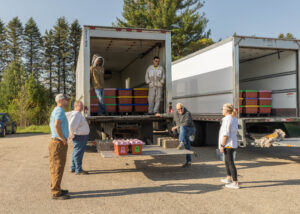
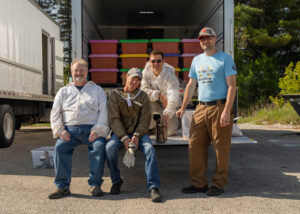
For 2026, GLBC has partnered with Olivarez Honey Bees (OHB) to bring premium three-pound packages of Carniolan, Golden West, Italian, and Saskatraz honey bees to backyard beekeepers in the Great Lakes region. Additionally, GLBC offers 5-frame and 9-frame nucs for first-season or expert beekeepers to add to their colonies. Both bee packages and nucs are available for purchase here in our store at TheGreatLakesBeeCo.com. Bee package pickup is scheduled for mid-April, while nucs are scheduled for early- to- mid-May.

“Bees play a vital role in Michigan’s agriculture,” said Genji Leclair, GLBC owner and expert beekeeper. “From fruit orchards to vegetable crops, bees are responsible for a significant portion of the food we enjoy every day. By continuing the tradition that Larry Hasselman started over 50 years ago, and being a local resource for beekeepers, we’re ensuring that our bee communities and the industries they serve remain strong throughout Michigan.”

Since 2016, GLBC has been a trusted expert in bees and beekeeping and understands how bees benefit Michigan’s economy and agriculture. The Fremont, Michigan-headquartered business continues the legacy of Hasselman’s Honey, founded by Larry Hasselman in 1974. In addition to bees, beekeeping equipment and beeswax products, GLBC sells its honey and infused honey wholesale to many retail outlets throughout Michigan, including Meijer, Whole Foods, Superior Foods, and Spice and Tea Merchants, and online.

“We are proud to partner with Olivarez Honey Bees in order to bring exceptional bees to our region’s backyard beekeepers,” said Genji Leclair, GLBC owner and expert beekeeper. “OH Bees is a trusted supplier and well known in the apiary community for raising resilient bees. Their dedication, caregiving, and bee expertise are invaluable to us as a honey bee distributor and plays a significant role in safeguarding the bee population.”

Olivarez Honey Bees is a family-owned business with three generations of beekeeping expertise. With locations in Northern California, Montana, and on Hawaii’s Big Island, OHB breeds more than 16,000 colonies of queens and package bees throughout the United States and Canada.

“These carefully chosen locations allow us to provide our bees with the purest environments and the best food sources, and to offer our customers premium, quality queens and bees year-round,” said Ray Olivarez, owner of Olivarez Honey Bees. “As a leader in the beekeeping industry, OHB replenishes hives across North America with strong, healthy, disease-resistant queens and bees that are excellent pollinators and phenomenal honey producers.”

When OHB bees arrive in Fremont, Michigan, in April and May, they will begin to forage on basswood, alfalfa, star thistle, and West Michigan flowers to create 150,000 pounds Michigan Honey. In addition to producing honey under the Hasselman, Michigan Wild, and SayLa Bee Infused Honey brands, the bees are also hired to help pollinate various crops including: almonds (January); apricots, sweet cherries, peaches and plums (April); tart cherries, pears, blueberries and apples (May).

In the Media:

Posted on

Michigan Agriculture magazine features Great Lakes Bee Co. in latest 2026 edition

Great Lakes Bee Company feature in Michigan Agricultural Magazine


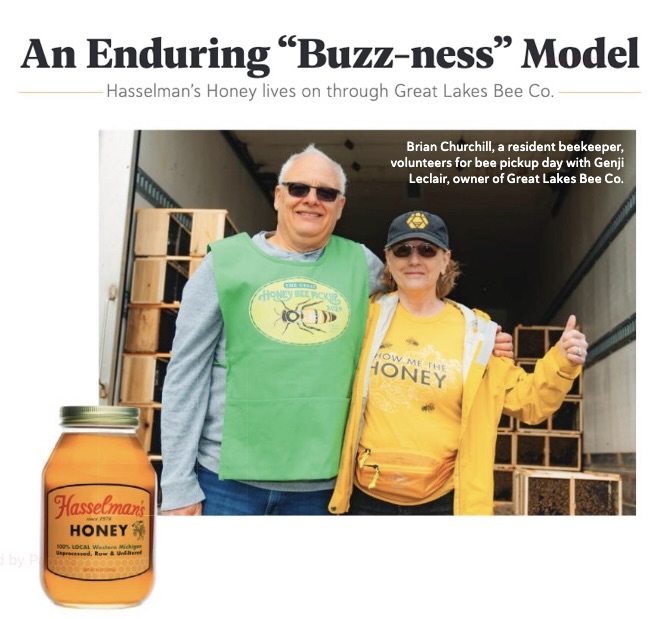
Great Lakes Bee Company and Hasselman’s Honey were featured in the latest 2026 edition of Michigan Agriculture magazine, in partnership with the Michigan Department of Agriculture & Rural Development.

You can read about our origins, a few helpful beekeeping tips, and the important friendship between Larry Hasselman, Genji Leclair, and bees!

When Genji Leclair moved to Michigan a little over a decade ago, she knew she wanted a beehive. She wasn’t expecting to inherit an entire honey-making business, though.

Check out the full article here.

Posted on

Great Lakes Bee Company Launches New Michigan-Made Honey In Celebration Of Honey Harvest Month


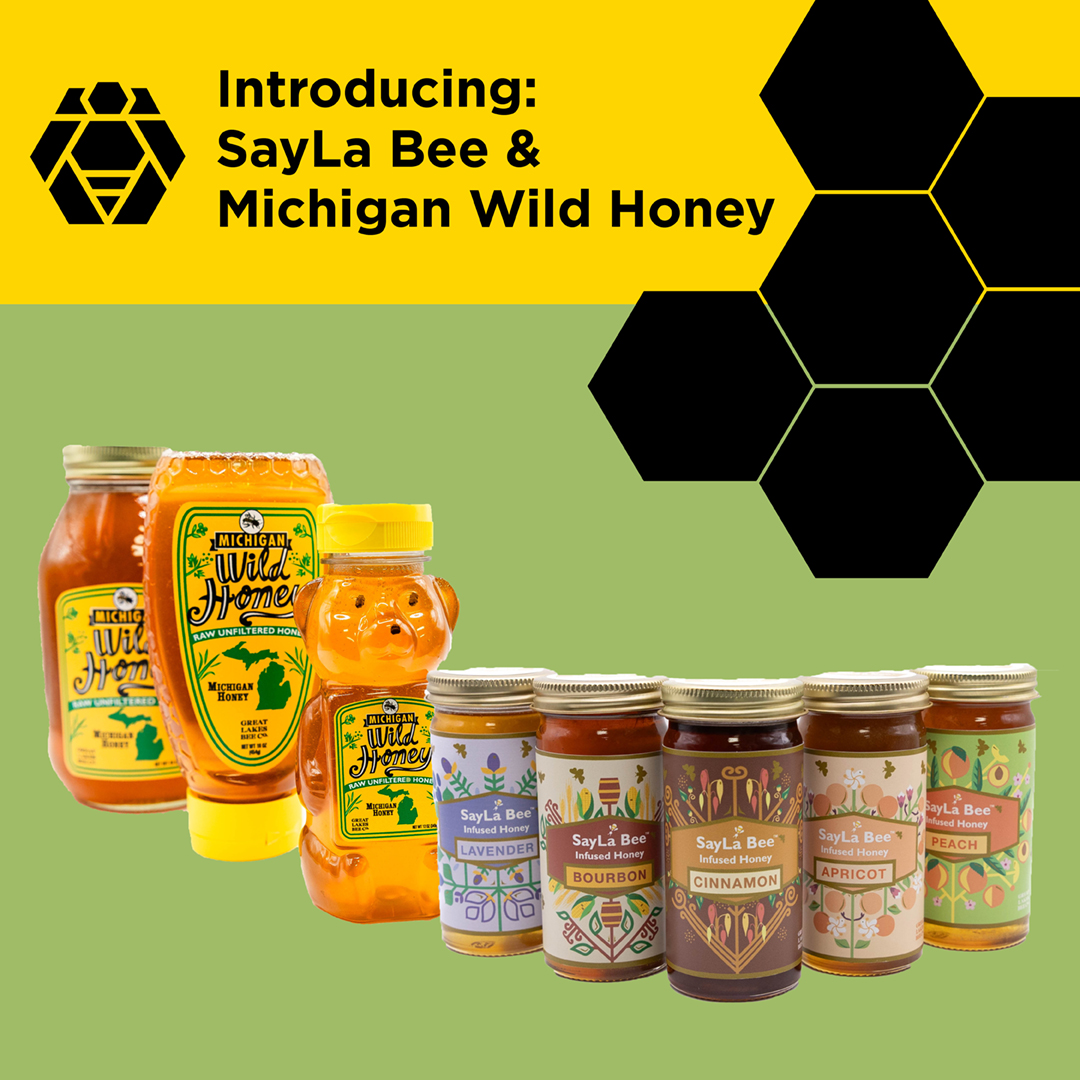
Continuing our celebration of National Honey Month this September, let’s properly introduce our two latest Michigan-made honey collections, SayLa Bee Infused honey, and our new brand of raw, unfiltered Michigan Wild Honey – both hand bottled right at the Great Lakes Bee Company facility in Fremont!

Our SayLa Bee Infused honey is pure, unfiltered, raw Michigan honey that is infused with a variety of flavors, ranging from sweet, fruity flavors like blueberry and apricot, to richer flavors like chocolate and cinnamon. There are a total of 18 SayLa Bee Infused honey flavors, and each come in the 6oz and 12oz options.

Our SayLa Bee products not only taste delightful, but nourish the body and soul – rose calms and relaxes, while orange supports immunity, and chocolate is a mood booster. Every ingredient that we use adds something special to our food and health!

Our Michigan Wild Honey is raw and unfiltered from hives across Michigan. The honey is carefully extracted, strained and filled without overheating. The summer harvest of Michigan Wild Honey captures the diverse flavors of area wildflowers, flowering trees, clover, lavender and thistle all blended into a lovely natural mix of medium-amber Michigan deliciousness.

You can shop the SayLa Bee collection and Michigan Wild on our website.


Posted on

May in the Hive

Great Lakes Bee Company - May in the Hive graphic


Welcome back to bee season! Your bees should be settling into their hives, and they may even be in a good mood if they have access to plenty of flowers and greenery. For tips on gardening catered to your bees, check out our recent gardening blog! Bees can be easier to work with in environments they like!

There’s no need to frequent hive check-ups this month. You can still monitor your bees, but excessive interference can disrupt their natural activities and reduce productivity. Checking on the hive sparingly will help maintain the bees’ productivity and won’t interrupt their natural rhythm.

We loved seeing all of your faces for Bee Nuc Pickup Day earlier this month! Photos from the event are below. We also posted additional photos on our Instagram and Facebook channels, where you can always hear the latest buzz about upcoming events, promotions, and news.

Posted on

Great Lakes Bee Co. celebrates grand opening and 50th anniversary of Hasselman’s Honey


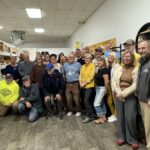
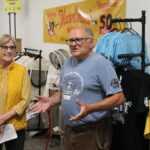
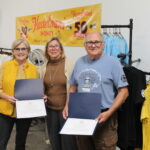
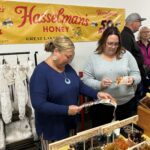
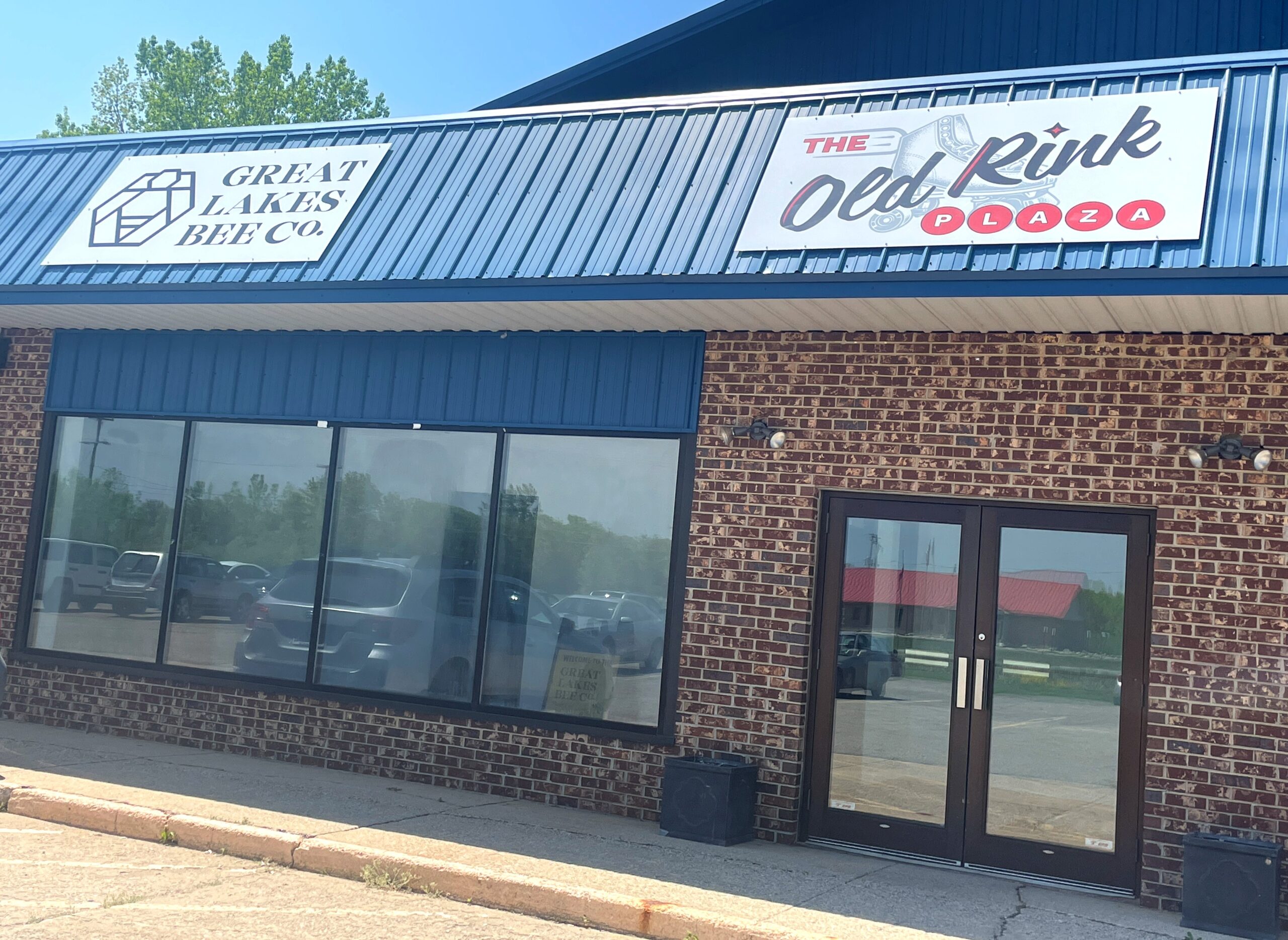
On Tuesday, Sept. 24, 2024, Great Lakes Bee Company hosted a grand opening at its new storefront in Old Rink Plaza in Fremont in celebration of Honey Harvest Month this September and the 50th anniversary of Hasselman’s Honey.

In recent years, backyard beekeeping has been on the rise, not just in Michigan, but nationwide. Great Lakes Bee Company in Fremont has been on the forefront of promoting the importance of beekeeping in the region and how it benefits Michigan’s economy and agriculture. Each May, bees from GLBC return home to Fremont, Michigan, after pollinating almond crops in California and rebuilding of hives in Georgia. When they’re back home, they forage on Newaygo County’s basswood, alfalfa, star thistle, and West Michigan flowers to create 150,000 pounds of Michigan’s Hasselman’s Honey.

“For us, it all started in 1974 with Larry Hasselman and his hobby for beekeeping,” said Great Lakes Bee Company owner Genji Leclair. “Larry founded Hasselman’s Honey after growing his passion and curiosity for bees, creating a distinctively delicious tasting honey. Since establishing Great Lakes Bee Company in 2016, it has been my mission to maintain Larry’s honey legacy and preserve the sources and processes that he has used since the 1970s, while also striving to produce only the best honey for our customers.”

During the event, Larry Hasselman shared how his honey business “accidently happened” with a Christmas gift of beekeeping items from his parents and the with bees would come later that spring. That spring Hasselman received two packages of bees and within a a couple months a majority of the bees in his two hives were dead.

“From then on, I called it the hobby that got out of hand,” laughed Hasselman.

From there, Hasselman grew his beekeeping hobby to 500 hives and began shipping “Hasselman’s Honey” throughout Michigan and Chicago.

“I was at the right place at the right time with the right people,” he said.

In addition to honey production, bees from Newaygo County also pollinate various crops including: almonds (January); apricots, sweet cherries, peaches and plums (April); tart cherries, pears, blueberries and apples (May).

“Bees play a significant role in our region’s and nation’s agriculture,” said Leclair. “By pollinating many crops used for animal feed, bees contribute to a third of the world’s food production. They are also essential in helping to maintain biodiversity and preserving our ecosystem that we depend on to survive. At Great Lakes Bee Company, we help educate the public about the irreplaceable value of honey bees to our environment.”

In addition to Hasselman’s Honey and supplying bees to beekeepers, GLBC sells beekeeping equipment and products made from their beeswax including candles and raw wax.

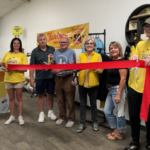
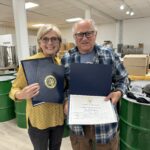
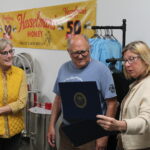
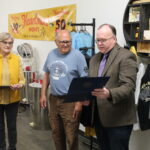
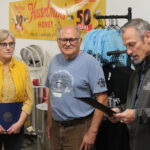
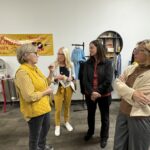
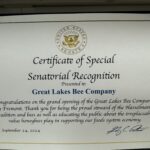
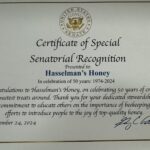
During the grand opening event, GLBC owner Genji Leclair and local representatives from the Fremont Chamber of Commerce and River Country Chamber of Commerce of Newaygo County hosted  a ribbon cutting signifying the opening of the new store. Additionally, Fremont City Manager Todd Blake, presented us with a City Council resolution;  while Kelly Lively from Sen. Gary Peters’ office and District Staff Assistant William Campbell from Congressman John Moolenaar’s office each presented a Certificate of Special Congressional Recognition to GLBC and Hasselman’s Honey.  Also in attendance were Jodi Gruner from the Michigan Department of Agriculture and Rural Development, State Rep. Joseph Fox; and Mary Judnich from Sen. Debbie Stabenow’s office.

“September is National Honey Harvest Month so it’s an exciting time for us in the bee business,” said Leclair. “We are excited to welcome the public to our new store, where you can learn more about bees, beekeeping and buy our own beekeeping supplies and honey-related products.”

Posted on

September in the Hive


This September is extra sweet … not only is it National Honey Month, but we’re also celebrating the 50th anniversary of Hasselman’s Honey!

Initiated by the National Honey Board in the U.S. in 1989, National Honey Month is a time to celebrate bees, honey, and beekeepers – just in time for harvest. People throughout the world depend on honey bees and their role in pollinating the ecosystem. Did you know about one-third of the average person’s diet in the United States is derived from insect-pollinated plants, and honey bees are responsible for about 80 percent of that process? It’s true! Without honey bees, we wouldn’t have apples, cabbage, lemons, onions, or watermelon, and other fresh crops.

Because of beekeepers, honey production continues to thrive. Rounding out the harvest season this September, there’s plenty for beekeepers to pay attention to in their hives, and some might start thinking ahead to the winter months.

If you’re harvesting honey, we recommend extracting your supers as soon as possible to avoid wax moth and small hive beetle larva, which can damage your hives. Beekeepers should also monitor for extra space in your supers, as any that are light with nectar will create more space for wax moths and small hive beetles to invade. Getting your supers extracted also lets you set them up back outside as a community feeder to both let bees build their stores, and get your combs cleaned out for winter storage. You should put these far away from the hives, or freeze them to reintroduce to the hives when needed.

Enjoy the last few weeks of summer with your bees! Thanks to you and your bees, beekeepers help make the world a sweeter place. Join us during Fremont’s Harvest Festival Parade on Sept. 26 as we celebrate the 50th anniversary of Hasselman’s Honey and Fremont’s OG Beekeeper, Larry Hasselman!

Posted on

Bourbon and Honey: Breaking Bourbon raves over New Holland’s Dragon’s Milk Origin Honey Barrel Bourbon made with GLBC Honey


In a review by Breaking Bourbon, Nick Beiter shared his tasting experience of New Holland Brewing Company’s second release of Dragon’s Milk Origin Honey Barrel, which uses GLBC’s Hasselman’s Honey.

“When combined with honey barrel finishing, the result is a whiskey that’s dense and sweet, with ample honey-influence throughout,” wrote Beiter. “Dragon’s Milk’s base bourbon flavor profile still manages to cut through the dense honey to create a complementary base. By that measure, it’s exactly what someone might expect from a honey finished bourbon, leaning heavily into the honey.”

According to Beiter, Dragon’s Milk Origin Honey Barrel, which debuted in April 2023, is set to be an annual, limited release from now on with bottles made available exclusively at New Holland’s Holland locations.

“To construct this small batch release, New Holland Spirits partnered with Great Lakes Bee Company to source their Hasselman’s Honey. Bourbon barrels were dumped and re-filled with honey to age, and then dumped again and refilled with Dragon’s Milk Origin Bourbon to finish before being batched and bottled.”

Read the full review from Breaking Bourbon’s Nick Beiter, here.

Posted on

Why The Metropolitan calls Great Lakes Bee Co. honey ‘delicious’ honey and beeswax candles a ‘rich experience’


The Metropolitan, a publication based in Detroit, featured Great Lakes Bee Company’s Hasselman’s Honey and beeswax candles in its June 2024 article, “What do you get by mixing, honey, hot sauce and fried chicken?”

Here’s why The Metropolitan’s staff called our honey “delicious” and the aroma and glow of our beeswax candles a “rich experience.”

The Metropolitan: What do you get by mixing, honey, hot sauce and fried chicken?

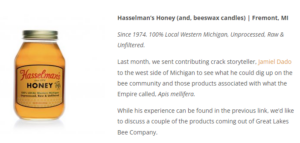
Hasselman’s Honey (and, beeswax candles) | Fremont, MI

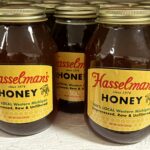
Since 1974. 100% Local Western Michigan, Unprocessed, Raw & Unfiltered.

Last month, we sent contributing crack storyteller, Jamiel Dado to the west side of Michigan to see what he could dig up on the bee community and those products associated with what the Empire called, Apis mellifera. In his article, “Beeing There,” for The Metropolitan, Jamiel wrote about his journey to Kropscott Farm Environmental Center and observations and discussions from our bee class.

While his experience can be found in the previous link, we’d like to discuss a couple of the products coming out of Great Lakes Bee Company.

It says right on the bottle that Hasselman’s Honey comes straight from the hive, with all the benefits natural honey has to offer. While there is rigorous debate over the health benefits associated with honey – natural sugar vs processed, local honey vs global, etc. – those who keep bees are confident that locally produced, raw, unprocessed honey not only tastes great but provides a myriad of benefits to better living (myriad, a word I do not use in daily conversation but thought it worked given the previous Latin).

We spoon this robust honey on our homemade bread and toast, in our bowl of Whole Milk Greek Yogurt w/ berries, and stir it in our afternoon teas.

Delicious!

Had I been with Jamiel, I might have asked Hasselman what makes the flavor of their honey unique? What flowers contribute to its taste? Does Lake Michigan have anything to do with the end product? How do we safely and ethically support bee communities into producing their finest product? And, how should bees be compensated for their work?

But, alas, I was not there.

Apart from Hasselman’s Honey, we have also been writing by beeswax candlelight for the past 30 days and must say, it has produced a much richer experience – we enjoy the aroma and its soft, flickering, glow!

Hasselman’s small batch honey comes from the Western Shores of Michigan and is hand bottled in Fremont, Michigan, by the Great Lakes Bee Company.


Posted on

We MOVED! Come see us at our new location on Warner Avenue in Fremont


Have you heard the news … WE’VE MOVED!! We’re now located in the Old Rink Plaza, 5973 S. Warner Ave., just down the road from Fremont High School! We are currently only open for in-person shopping by appointment at this time until we get fully settled.

As always, we are open online 24/7 at www.GreatLakesBeeCo.com (Any orders placed online, can be picked up without having to make an appointment).

To schedule an appointment, email: info@greatlakesbeeco.com

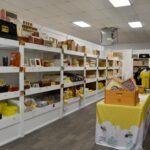
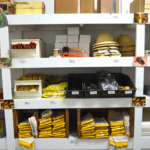
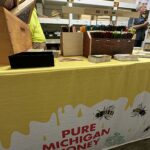
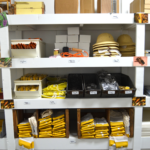
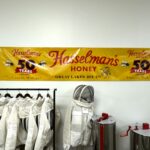
Here’s a sneak peek inside our new space!

Posted on

Great Lakes Bee Company featured in The Metropolitan


Writer and gardner Jamiel Dado joined us for our second beekeeping class in March. In his article, “Beeing There,” for The Metropolitan, Jamiel wrote about his journey to Kropscott Farm Environmental Center and observations and discussions from our bee class.

In his article, Jamiel writes:

“Stefan (Braun) turned out to be a very affable teacher and made the time fly. He made it quite clear from the beginning that keeping bees would result in getting stung quite often. He said that he gets stung on average 50 times a year. He explained that although he wears the protective headgear, he doesn’t usually wear the gloves. I could imagine that they would be bulky and thus difficult to handle things. At this point, a retired doctor in the group informed the class that bee sting therapy was still widely used in the treatment of arthritis. So, I guess it’s a positive thing? It became clear during the presentation that many things the beekeeper does to the bees ends up making them angry, explaining the large amount of stinging involved. His main advice regarding the stinging was to get the stinger out as soon as possible.

One of the controversial aspects about beekeeping (and there are several) that I have come across is the notion that when you harvest honey from the hive, you essentially starve the bees during the winter. I was happy to learn during the course of the day that this is not the method of the responsible beekeeper. Each hive of bees needs between 60-100 pounds of honey to get through the winter. This is accomplished in the space of two supers filled with honeycombed nucs. Once these are filled, additional supers and nucs are placed on top and those are soon filled as well. Stefan asserts that bees are naturally overachievers and will produce much more honey than they need to get through the winter. On average, using this method will supply you with 50-100 pounds of excess honey to harvest per hive!

That’s a lot of honey!

Way to go bees!

One of the best pieces of advice that Stefan stressed on more than one occasion was to find a local bee club to find a mentor and resources. Most bee clubs will have important equipment needed to harvest honey and will usually share or rent it out to members.

If the idea of having a surplus of honey and a new hobby interests you, then I would recommend learning a thing or two from Stefan and the Great Lakes Bee Company. In addition to the classes, they sell bees to get you all set up. In fact, you can purchase nine frame “nucs” that will give you a head start on your honey production.”

Thank you, Jamiel, for joining us at our beekeeping class and writing a fun story about beekeeping!

Read Jamiel’s full article in The Metropolitan, here.