Posted on

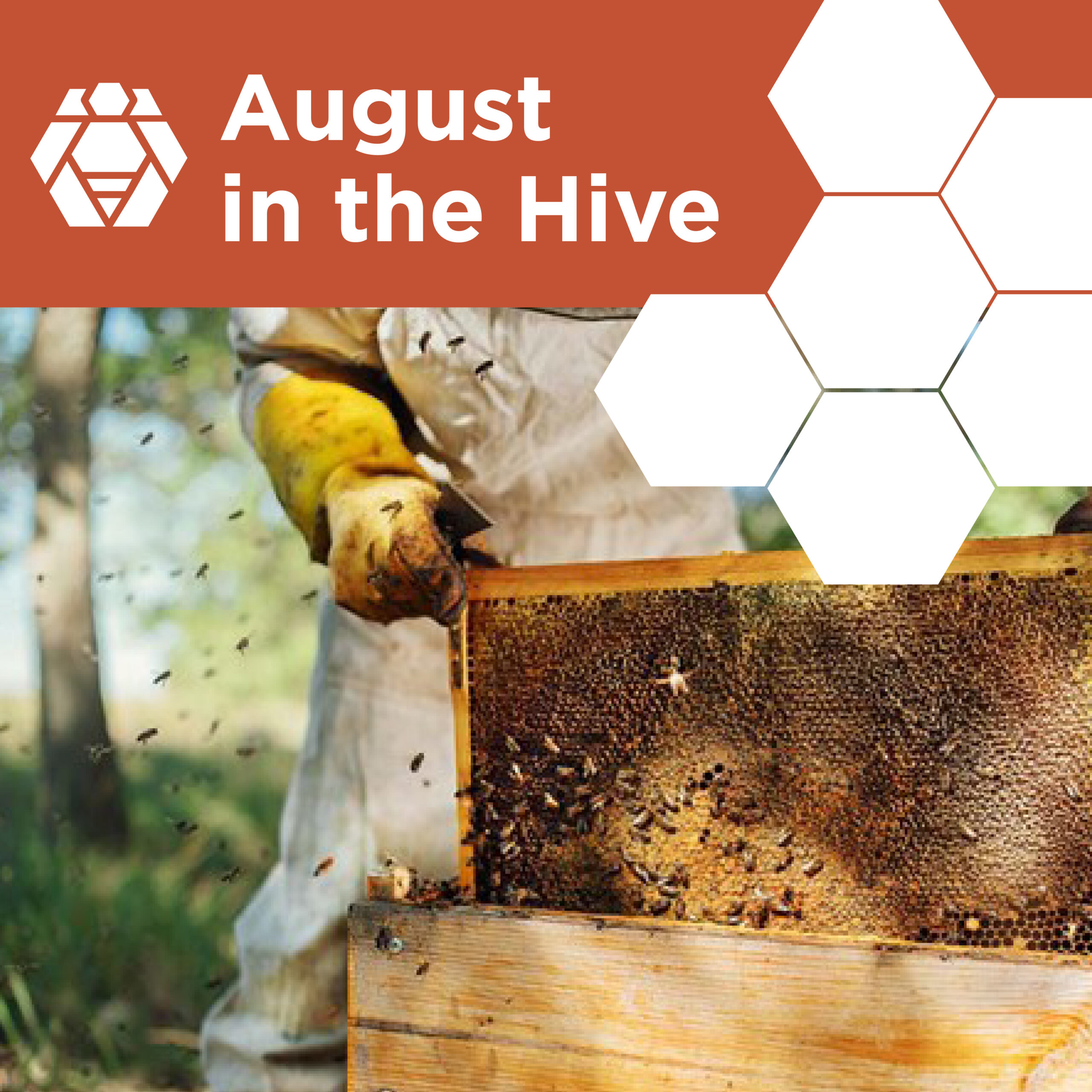
August in the Hive


August is a big month for your bees! As the summer grows hotter, asters and other wildflowers create an abundance of pollen and nectar for the colony. This will help the bees as they start to prepare for winter, and you can support them in this process too!

This time of year, beekeepers should be checking hives for mites and other pests. Varroa mite populations increase in hives during the summer and hit a peak just as honeybee colonies are laying eggs and raising brood for the winter. To fight back against a mite population in your beehive, take precaution and follow the Honey Bee Health Coalition’s Varroa Management Decision Tool.

The most important thing we recommend for beekeepers in late summer is to help keep your bees cool. During the hot summer months, keep water available at all times, such as in bird baths, tubs, or other shallow containers. Even a simple bowl of water with rocks and sticks can be extremely helpful for those busy bees!

If your bees are happy, the keeper is happy!

Posted on

Getting the most out of your honey and beeswax


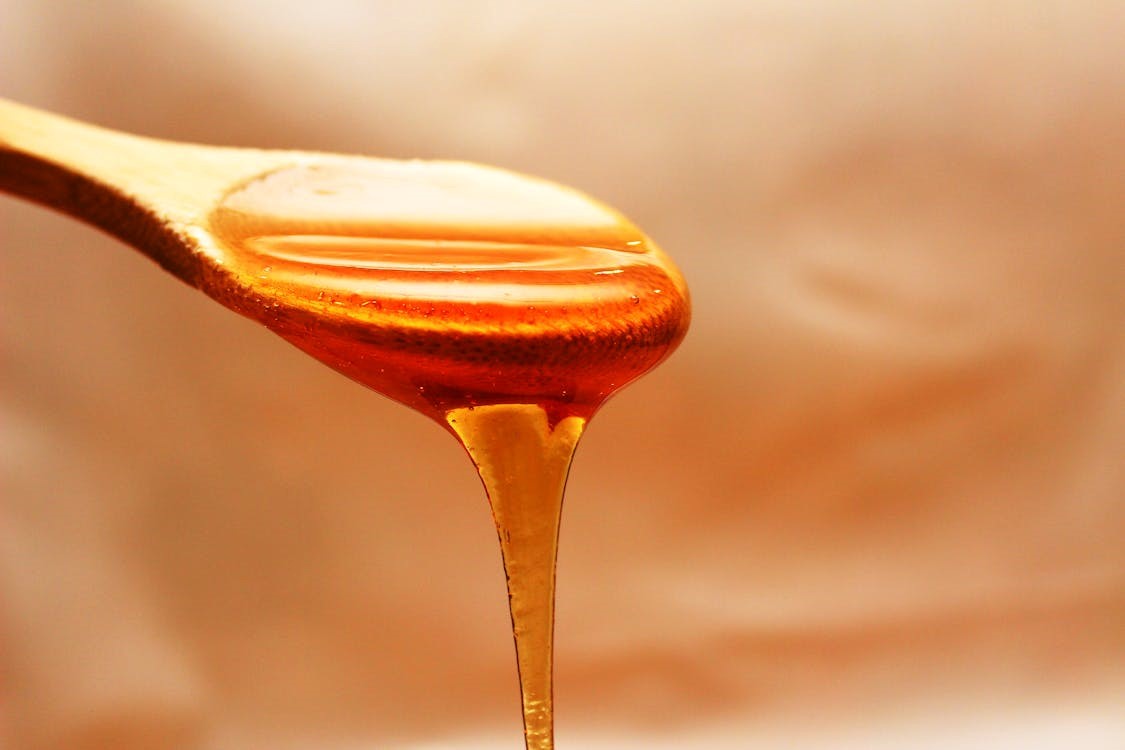
There’s no such thing as “too much” of a good thing—but if you find yourself with extra honey or beeswax after your harvest, here are some ideas to use up your supply while freshening up your life!

If you’re hosting a dinner party, or looking to liven up your hors d’oeuvres, try adding some honey! Next time you’re thinking about appetizers, pair your honey with soft fresh cheese such as chèvre or brie alongside jam, nuts, and toasted bread. If you prefer to skip straight to the entrée, sweeten up your tomato sauce! Instead of heaps of sugar to your sauce to cut the acidic bite of a tomato, use honey for a healthier sauce that still holds onto rich flavors. Couple your sweet charcuterie board and pasta sauce with a crisp white wine, and you have a match made in heaven!

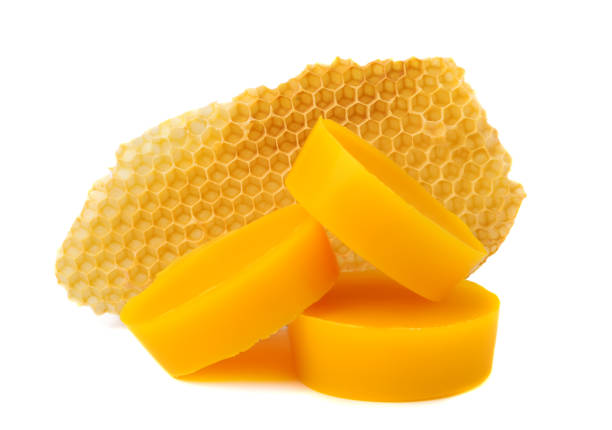
You might’ve heard that beeswax is “nature’s most versatile product”. With your leftover beeswax, you have plenty of options to use it around the house or in your garden! Season cast iron pans, condition your cutting boards and wooden spoons, or prevent rust by coating your garden tools in wax. You can even make your own beeswax lip balm and body butter to treat yourself to some self-care!

Honey and beeswax are as versatile as they come! Make the most out of what you have and experiment with more sweetness in your recipes and around your household.

Posted on

Honey as a health benefit? Absolutely!


If you’re looking for a quick, easy, and tasty way to improve your health, look no further than your bee hives! Since ancient times, honey has been appreciated for its medicinal uses alongside its reputation as a natural sweetener. There are a number of nutritional benefits from adding honey to your day-to-day routine, including the management of your blood pressure and cholesterol.

Many antioxidants that are found in honey are useful in defending our cells from damage that can cause premature aging, type-2 diabetes, and heart disease. Honey may increase adiponectin levels, a hormone that reduces inflammation and improves blood sugar regulation, while also regulating blood platelet coagulation. This activity in the cardiovascular system means honey is an excellent deterrent against heart disease and other cardiac disorders.

Not only is honey rich in antioxidants, but it also possesses prebiotic properties, which create healthy gut bacteria that help break down food and absorb nutrients. These important aspects of honey contribute to a stronger immune system overall.

These only scratch the surface of health benefits that have been observed in honey! Start adding some to your tea or treat yourself to a spoonful every so often; if our ancestors could use honey medicinally, so can you!

Read more about the health benefits of honey in Health.com

Posted on

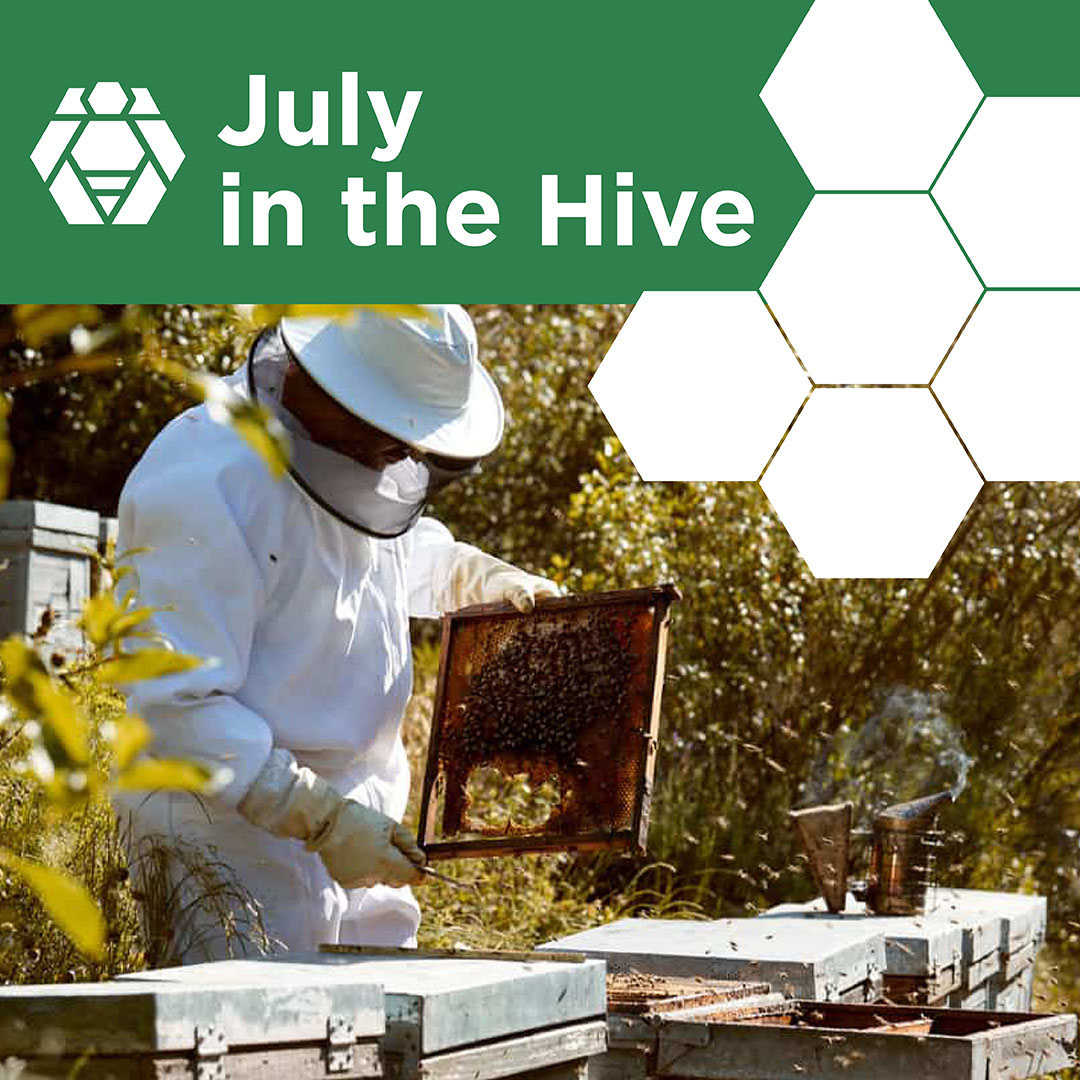
Month in the Hive – July


Summer is prime bee season! Michigan bees have been foraging on all the blossoming flowers and trees, including sumac, milkweed, basswood and clover, in order to create a robust nectar flow.

Now that we’re in July, West Michigan bees are busy making honey in their hives. For beekeepers, there isn’t a need to be constantly digging around in the hive unless you’re managing swarm prevention. Be patient if you see a swarm as they usually disband, often within about 15 minutes or an hour.

During July’s hot and humid days, you may notice bees resting outside of the hive. This is completely normal as this is their way of keeping cool.

Throughout the month of July, continue weekly hive inspections, looking for the queen, and checking on the overall health of the hive.

Posted on

Why The Metropolitan calls Great Lakes Bee Co. honey ‘delicious’ honey and beeswax candles a ‘rich experience’


The Metropolitan, a publication based in Detroit, featured Great Lakes Bee Company’s Hasselman’s Honey and beeswax candles in its June 2024 article, “What do you get by mixing, honey, hot sauce and fried chicken?”

Here’s why The Metropolitan’s staff called our honey “delicious” and the aroma and glow of our beeswax candles a “rich experience.”

The Metropolitan: What do you get by mixing, honey, hot sauce and fried chicken?

Hasselman’s Honey (and, beeswax candles) | Fremont, MI

Since 1974. 100% Local Western Michigan, Unprocessed, Raw & Unfiltered.

Last month, we sent contributing crack storyteller, Jamiel Dado to the west side of Michigan to see what he could dig up on the bee community and those products associated with what the Empire called, Apis mellifera. In his article, “Beeing There,” for The Metropolitan, Jamiel wrote about his journey to Kropscott Farm Environmental Center and observations and discussions from our bee class.

While his experience can be found in the previous link, we’d like to discuss a couple of the products coming out of Great Lakes Bee Company.

It says right on the bottle that Hasselman’s Honey comes straight from the hive, with all the benefits natural honey has to offer. While there is rigorous debate over the health benefits associated with honey – natural sugar vs processed, local honey vs global, etc. – those who keep bees are confident that locally produced, raw, unprocessed honey not only tastes great but provides a myriad of benefits to better living (myriad, a word I do not use in daily conversation but thought it worked given the previous Latin).

We spoon this robust honey on our homemade bread and toast, in our bowl of Whole Milk Greek Yogurt w/ berries, and stir it in our afternoon teas.

Delicious!

Had I been with Jamiel, I might have asked Hasselman what makes the flavor of their honey unique? What flowers contribute to its taste? Does Lake Michigan have anything to do with the end product? How do we safely and ethically support bee communities into producing their finest product? And, how should bees be compensated for their work?

But, alas, I was not there.

Apart from Hasselman’s Honey, we have also been writing by beeswax candlelight for the past 30 days and must say, it has produced a much richer experience – we enjoy the aroma and its soft, flickering, glow!

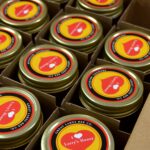
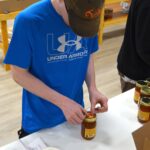
Hasselman’s small batch honey comes from the Western Shores of Michigan and is hand bottled in Fremont, Michigan, by the Great Lakes Bee Company.


Posted on

We MOVED! Come see us at our new location on Warner Avenue in Fremont


Have you heard the news … WE’VE MOVED!! We’re now located in the Old Rink Plaza, 5973 S. Warner Ave., just down the road from Fremont High School! We are currently only open for in-person shopping by appointment at this time until we get fully settled.

As always, we are open online 24/7 at www.GreatLakesBeeCo.com (Any orders placed online, can be picked up without having to make an appointment).

To schedule an appointment, email: info@greatlakesbeeco.com

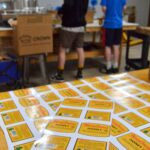
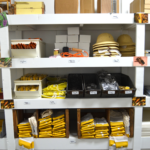
Here’s a sneak peek inside our new space!

Posted on

Great Lakes Bee Company featured in The Metropolitan


Writer and gardner Jamiel Dado joined us for our second beekeeping class in March. In his article, “Beeing There,” for The Metropolitan, Jamiel wrote about his journey to Kropscott Farm Environmental Center and observations and discussions from our bee class.

In his article, Jamiel writes:

“Stefan (Braun) turned out to be a very affable teacher and made the time fly. He made it quite clear from the beginning that keeping bees would result in getting stung quite often. He said that he gets stung on average 50 times a year. He explained that although he wears the protective headgear, he doesn’t usually wear the gloves. I could imagine that they would be bulky and thus difficult to handle things. At this point, a retired doctor in the group informed the class that bee sting therapy was still widely used in the treatment of arthritis. So, I guess it’s a positive thing? It became clear during the presentation that many things the beekeeper does to the bees ends up making them angry, explaining the large amount of stinging involved. His main advice regarding the stinging was to get the stinger out as soon as possible.

One of the controversial aspects about beekeeping (and there are several) that I have come across is the notion that when you harvest honey from the hive, you essentially starve the bees during the winter. I was happy to learn during the course of the day that this is not the method of the responsible beekeeper. Each hive of bees needs between 60-100 pounds of honey to get through the winter. This is accomplished in the space of two supers filled with honeycombed nucs. Once these are filled, additional supers and nucs are placed on top and those are soon filled as well. Stefan asserts that bees are naturally overachievers and will produce much more honey than they need to get through the winter. On average, using this method will supply you with 50-100 pounds of excess honey to harvest per hive!

That’s a lot of honey!

Way to go bees!

One of the best pieces of advice that Stefan stressed on more than one occasion was to find a local bee club to find a mentor and resources. Most bee clubs will have important equipment needed to harvest honey and will usually share or rent it out to members.

If the idea of having a surplus of honey and a new hobby interests you, then I would recommend learning a thing or two from Stefan and the Great Lakes Bee Company. In addition to the classes, they sell bees to get you all set up. In fact, you can purchase nine frame “nucs” that will give you a head start on your honey production.”

Thank you, Jamiel, for joining us at our beekeeping class and writing a fun story about beekeeping!

Read Jamiel’s full article in The Metropolitan, here.

Posted on

2024 Spring Bee Pickup on Saturday, May 4: What you need to know


Dear Beekeepers,

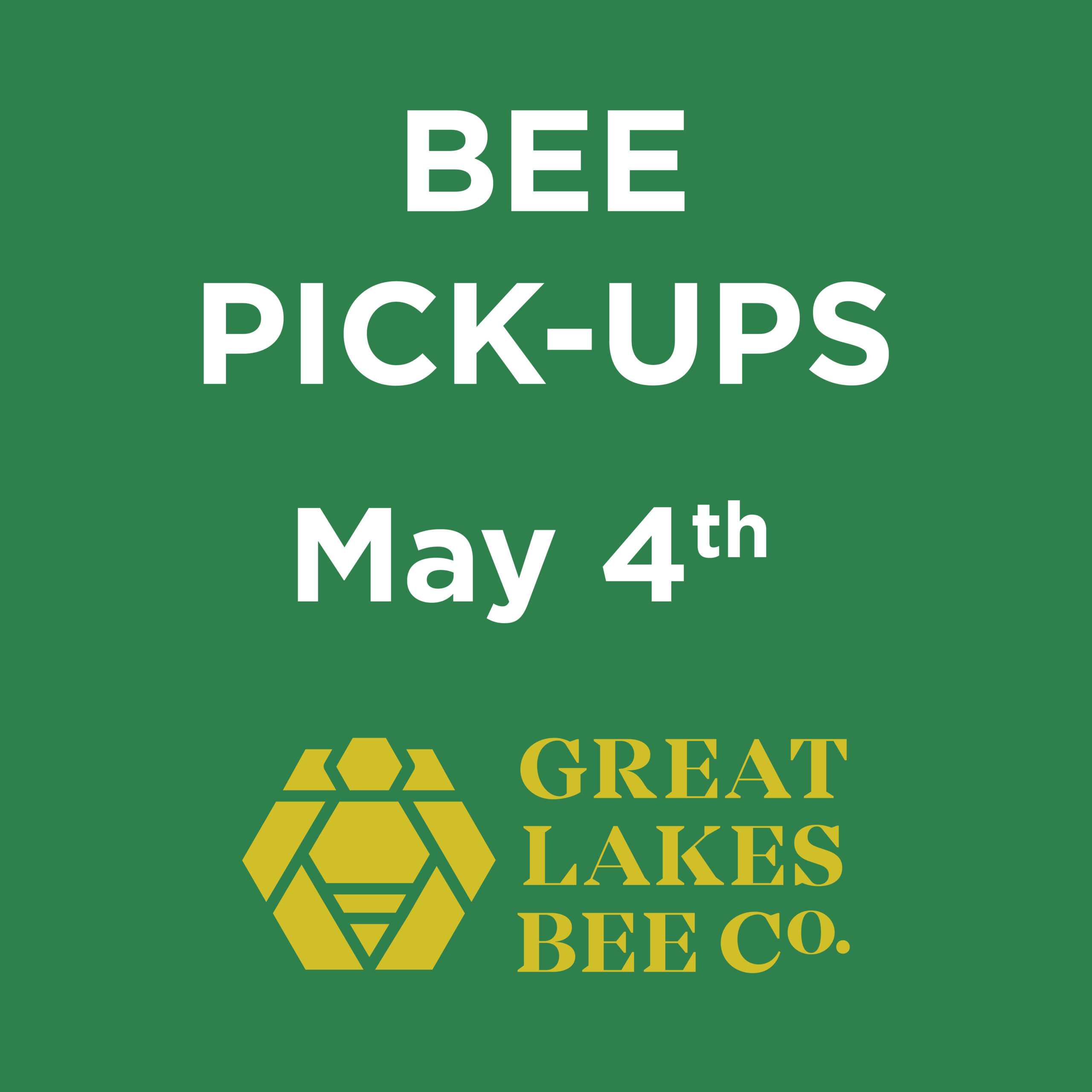
2024 Bee Pick-Up Day is Saturday, May 4!

Time: 8 a.m. to 5 p.m.

Pick Up Address:
Great Lakes Bee Company
5973 S. Warner Avenue
Fremont, MI  49412

Check or Cash helps keep costs down. If you prefer to use a card, a 3% card fee will be added at time of payment. Payments will be due at pick up.

Packaged bees and 5 frame nucs:

  • These are contained and easy to transport. They will need air and circulation, but no additional box or covering is needed.

9 Frame Nucs:

  • You will need a bottom board, outer cover and set of ratchet straps for each nuc.  We have bottoms, covers and straps available at pick up if needed.  9 Frame nucs travel well in the back of a truck, van, roomy trunk.  Be sure it has plenty of ventilation so bees won’t overheat.

We have a wide variety of woodenware and bee equipment available for purchase at pick up.

Keep your eye out for more updates on our social channels as we get closer!

Any questions: text (231) 335-0929 or email info@greatlakesbeeco.com

We can’t wait to see you on Saturday, May 4!

– Great Lakes Bee Company 


Posted on

Month in the Hive – March


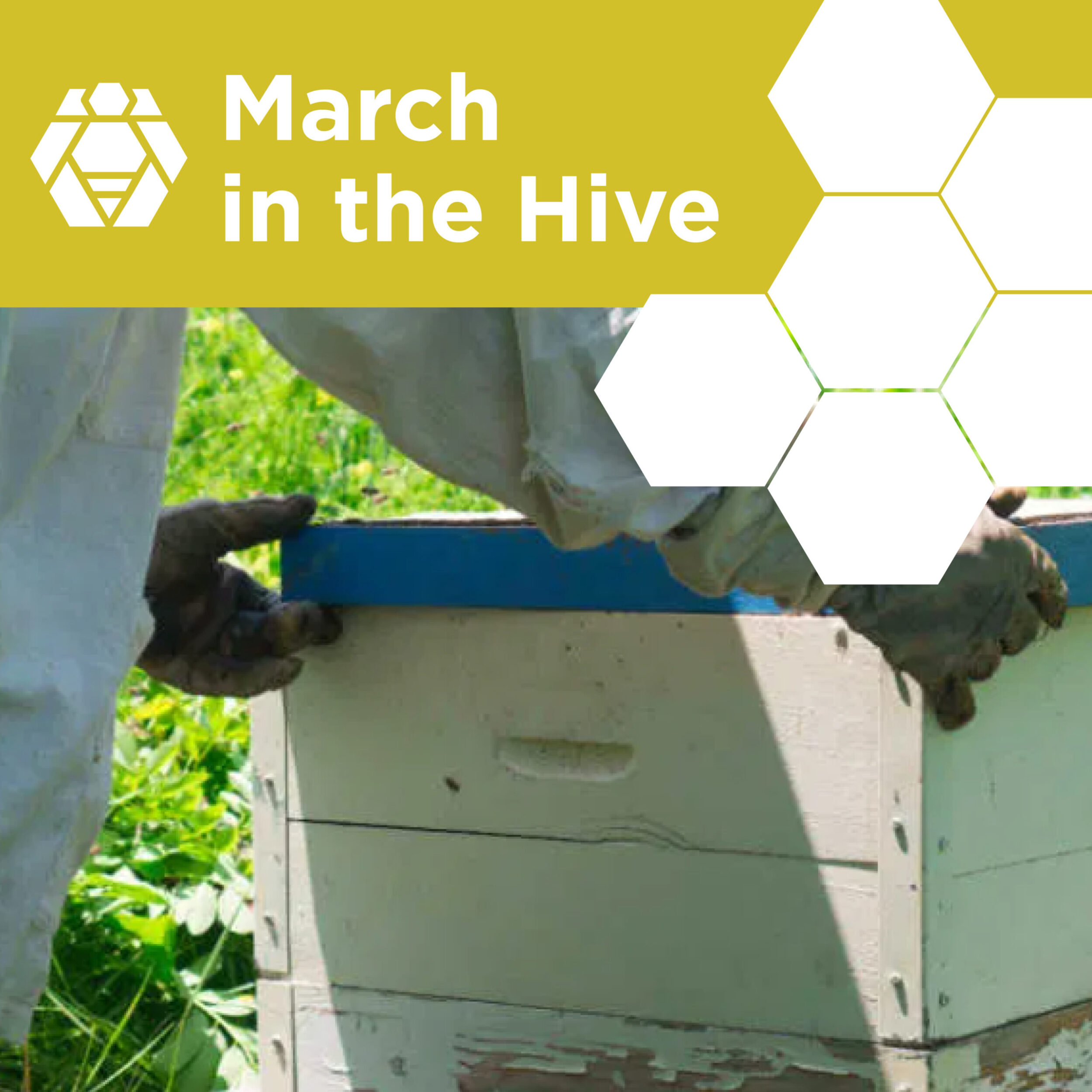
Spring has officially sprung in West Michigan! As the snow disappears and temperatures become a bit warmer, it’s time to get out and check on your hives more regularly.

In early spring, it’s common for colonies to die of starvation. However, if you’ve fed your bees with plenty of sugar syrup in the fall, they should be okay. Bees need more food during this time of year for brood rearing, but can’t forage just yet. That’s why it’s important to check their food stores when the weather is mild. We recommend hives have at least three or four combs full of honey to get them through the next couple of months until nectar and pollen are available and accessible outside. If there isn’t any sealed honey in the top frames, you may need to begin some emergency feeding. You can use dry sugar, fondant, or a candy board, or replace empty combs with combs of capped honey.

Keep in mind when feeding, we recommend keeping the frames intact, and just peeking under the cover. The bees’ proximity to their food source is key. If the cluster is far to one side of the food, you can carefully move it closer, keeping it together while you do so, or move frames of honey closer.

With the days growing longer, the queen steadily increases her rate of egg laying as well. More brood means more food consumed. The drones begin to appear, and bees will continue to consume honey stores. Feeding protein patties is an optional practice to ensure that bees have access to protein for brood rearing. Generally, bees will slowly begin to forage for pollen when the weather is dry and warm. Pollen provides much-needed protein for larval development. But when they can’t forage due to cold and wet weather, protein patties serve as a great source of protein and cover for periods when the colony continues to raise brood. Beekeepers can choose to feed protein patties throughout the spring or choose to monitor weather conditions and the pollen intake into the hive to ensure their bees are getting the necessary protein they need.

Next up: Preparing and planning for the upcoming season!

Posted on

Month in the Hive – February


Are you getting into bees and confused by all of the hubbub about queens or “breeds” of bees? Well, it is easy to say it doesn’t matter and bees are bees. But that doesn’t really answer the question. One thing we need to remember is that when someone is selling Italian bees, Carniolan Bees, or Russian bees, they are selling bees based on traits and characteristics more than genetics. These traits have been selected for years in breeding programs to accentuate characteristics found in the namesake populations. Much like cultivar groups of brussels sprouts, broccoli, cabbage, collard greens, kale, and kohlrabi are the same species of cruciferous, but express different traits due to selective breeding.

When someone is selling Italian queens or bees, they are selling bees that tend to develop large clusters. With the large clusters, Italians tend to produce ample honey crops. Also, they are fairly gentle bees that show little aggression toward the beekeepers’ missteps. The large clusters can be a blessing or a hindrance going into winter. Bees huddle together to keep warm in the winter, so more the merrier, right? Well, with all of those mouths to feed they need more resources in the cold winters and spring that follows. A well-stocked Italian hive will survive winter and spring, but if the pollen and nectar fail to materialize, Italians will burn through resources to be ready for an eventual flow. This can lead to starvation in a delayed spring if the beekeeper does not keep an eye on them. As far as physical traits, Italian bees tend to be blond in color with brown to black stripes. Italian queens tend to be blond to light orange/amber with occasional brown to black markings.

Carniolan queens and bees, on the other hand, winter in smaller clusters. This is great for conserving resources, but can lead to excessive die off in exceptionally cold winters. They do develop strong clusters in the spring, but unlike Italians they will pull back brood rearing if resources become scarce. Carniolan bees are one of the gentlest bee varieties you’ll find. The bees tend to be orange/amber to black with black stripes, while the queens range from a dark orange or brown to black.

The last common variety of honey bee is the Russian. Russians are an interesting mix. They winter with good sized clusters and produce good honey crops. They have been shown to carry lighter mite loads and have lower tolerance for mite presents. So, what is the downside to Russian bees? Well, they are a bit more aggressive than Italians or Carniolans, and tend to swarm more. Some will say that more aggressive bees will produce more honey, but in our experience aggression does not correlate to honey production. The tendency to swarm helps with mites by introducing brood breaks. The coloring of Russian bees would fall about in the middle of Italians and Carniolans, while the Russian queens tend to be blond to orange/amber in color and often have brown to black stripes.

Finally, you may have heard of bee brands like Beeweaver, Saskatraz, and Ankle Biters. These brands have meticulously bred bees to focus on traits the breeder finds attractive. Each and every brand will tell you in detail what they focus on, but in general they focus on mite resistance, gentleness, and honey production. You may come across Varroa Sensitive Hygiene (VSH) and VSH stock is the fruit of breeding programs that select breeding stock based on the tests that evaluate hygienic behavior. Hygienic behavior for bees is seen in uncapping, recapping, and removal behavior of brood that is not “normal” or healthy. This behavior translates to fewer mites in the hive and a less hospitable environment for mites to reproduce.

Where does this leave you for selecting the type of bees? Personally, we recommend new beekeepers start off with Carniolans or Italians. This is because of their gentleness and they are a bit more forgiving of “newbees” mistakes. After several years, once the newbee has become a proficient beekeeper, then one might bring in stock with traits they want to introduce into their apiary.